Ecclesiastical life
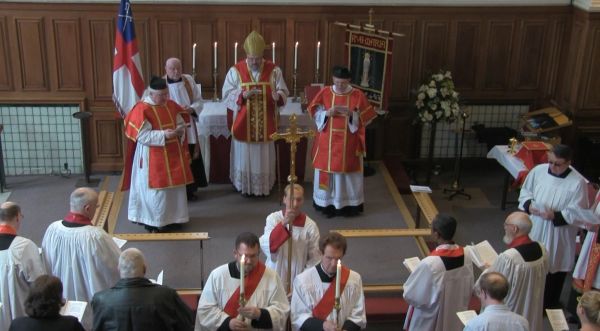
Dr Mead is a bishop of the Anglican Catholic Church, within the Continuing Anglican tradition, and serves in its Diocese of the United Kingdom. He was ordained to the priesthood in 1990 and consecrated to the episcopate on 20 September 2008.
His ministry has combined pastoral and sacramental responsibilities with a particular interest in Anglican history, theology, liturgy and the continuing place of Christian service within public and community life.
In October 2025 he was appointed Chaplain to the Council of Manorial Lords, bringing together two longstanding areas of interest: the historic institutions of England and the Christian understanding of stewardship and service.
His theological studies and distinctions include an Honorary Doctor of Divinity (HonDD) from Johann Heinrich Pestalozzi Christian University, Miami, Florida, USA, a Fellowship in Theology from Victoria College, London (FVCM(Th)), an Honorary Fellowship in Religious Studies from the National College of Music and Arts, (HonFDipRS) and a Fellowship of the Central School of Religion, London, (FCSR).

Professional and charitable work
Outside ecclesiastical life, Dr Mead is best known for his work in specialist foster care. In August 2000 he co-founded what is now Credo Care Fostering Limited, an independent fostering organisation specialising in placements for disabled children and young people, including those with autism, complex medical needs and life-limiting conditions. He continues to serve as its Chairman.
During its development, Credo Care became the first independent fostering agency to receive accreditation from the National Autistic Society. Over more than twenty-five years it has supported hundreds of children and young people and their foster families.
The organisation was judged Outstanding in all areas by Ofsted in 2026, during its Silver Jubilee period.

In 2026 Dr Mead also Founded and became Chairman of the Trustees of the Credo Care Foundation, established to provide charitable assistance to children, young people and others with disabilities and complex needs, particularly where statutory provision does not fully meet the cost of specialist equipment, adaptations and opportunities capable of improving quality of life.

Wider Charitable Interests
His wider charitable interests have included support for organisations and projects within Eastbourne and Sussex as well as national causes. These have included Meads Hall, The Beachy Head Chaplaincy Team , Eastbourne Foodbank and the Royal National Lifeboat Institution, together with a wider personal commitment to charitable giving and community service at home and abroad.
He is pictured here by the Meads Hall Sponsorship Board at the reopening of Meads Hall, 8 April 2025, with William Cavendish, Earl of Burlington, who opened the hall and unveiled the board.
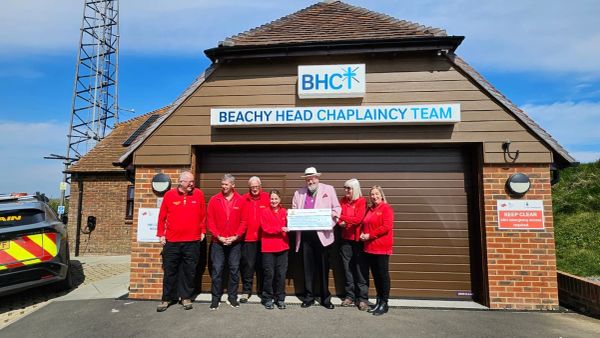
Dr Mead is especially grateful for the opportunity to support Beachy Head Chaplaincy Team in their important work saving lives at Beachy Head and along the coast there. Combining Christian ministry with essential service and care in the community is very close to his heart.
Civic and public life
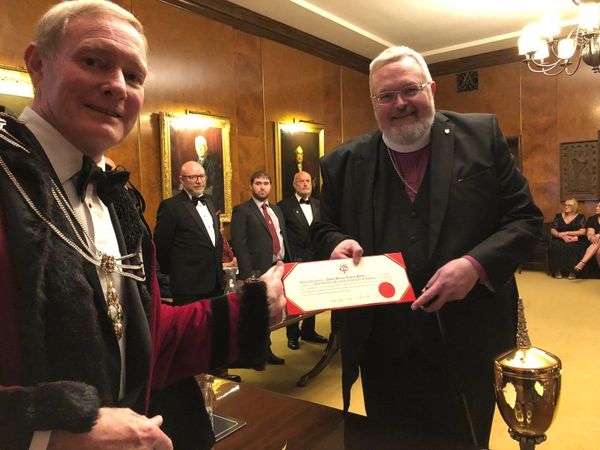
Dr Mead is a Freeman of the City of London, a Member of the Guild of Freemen of the City of London (pictured at his Admission to the Guild) and a Fellow of the Royal Society of Arts.
He is also Chairman of The Crown Society, an organisation concerned with the study, appreciation and promotion of constitutional monarchy, its history and its continuing place within modern society.
Dr Mead is a Life Member of the Royal Society of St George and a Trustee of the Society's California (USA) Branch.
His other civic, charitable and cultural associations reflect interests in heritage, public service, humanitarian activity and the preservation of historic institutions.
Awards and distinctions
Dr Mead has received a number of awards and distinctions recognising aspects of his charitable, humanitarian, ecclesiastical and public service.
Among these are appointment as a Kentucky Colonel in 2022; the Pestalozzi Cross of Merit in 2022; the Saint Oscar Romero Medal in 2024; and distinctions within the Royal Order of the Tiger and Hawk of New Sawereso-Seinuah, Ghana, including appointment as an Honorary Knight Grand Officer in 2024 and advancement to the Grand Cross (GCTH) in 2025.
In 2024 he also received an International Humanitarian Award from the Jose Rizal Heritage organisation in recognition of humanitarian and charitable activity.
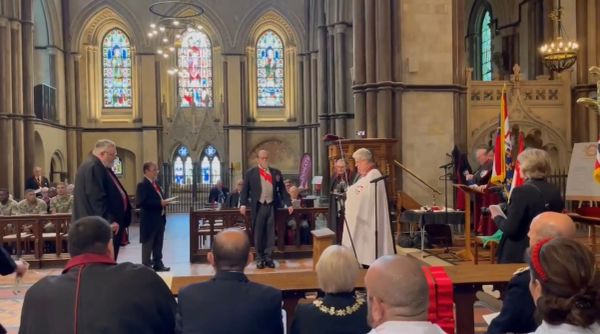
Dr Mead is additionally a Knight of the Order of St George, (KStG) to which he was admitted in 2022 during an Investiture in Rochester Cathedral (Pictured).
These distinctions are regarded by him principally as recognition of the organisations, causes and communities with which he has been privileged to work.
Awards, Insignia and Certificates










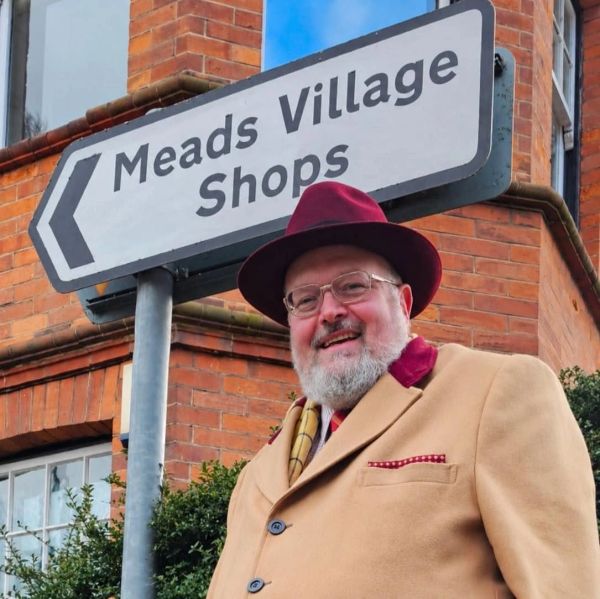
Eastbourne Medsey
Dr Mead is a Member of the Manorial Society of Great Britain (Est 1906). His connection with Eastbourne predates his succession to the lordship and has been strengthened through his support for local charitable and community initiatives.
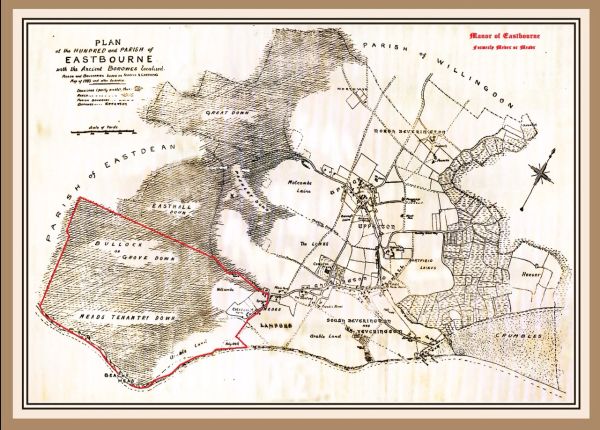
His association with Meads has subsequently developed through historical research into the manor and its former landscape, including Meads, the Downs and the area towards Beachy Head.
For Dr Mead, the modern purpose of holding an historic manorial lordship is not an attempt to recreate the social structures of another age. Rather, it provides an opportunity to preserve a small part of England’s historical inheritance, to encourage serious research into its documentary past, and, where possible, to associate an ancient dignity with useful service in the present.
He has accordingly sought to ensure that the history of Eastbourne Medsey is presented with appropriate documentary support and with a clear distinction between established fact, reasonable historical inference and later tradition.

Heraldry and insignia
Dr Mead uses personal episcopal arms authorised for his ecclesiastical use. His personal crest incorporates a Pelican in Her Piety, an ancient Christian symbol of sacrificial love and of Christ giving Himself for His people.
The emblem used in connection with the Manor of Eastbourne Medsey is distinct from his personal arms. It combines the pelican with a stylised acanthus-leaf manorial coronet, employed as an emblem of the lordship rather than as a claim to noble or royal rank.
The manorial motto,
UBI COLLES OCCURRUNT MARI
— Where the hills meet the sea —
reflects the distinctive landscape of Meads and the South Downs as they descend towards the English Channel at Eastbourne.
Stewardship
He regards the Lordship of Eastbourne Medsey as one element within a much broader life of Christian ministry, charitable work and public service.
The continuing work associated with the manor is therefore centred upon historical research, documentary preservation, responsible stewardship and community connection: ensuring that an ancient part of the story of Eastbourne and Meads is recorded accurately and handed on with care to those who come after.
Home & Family
Home
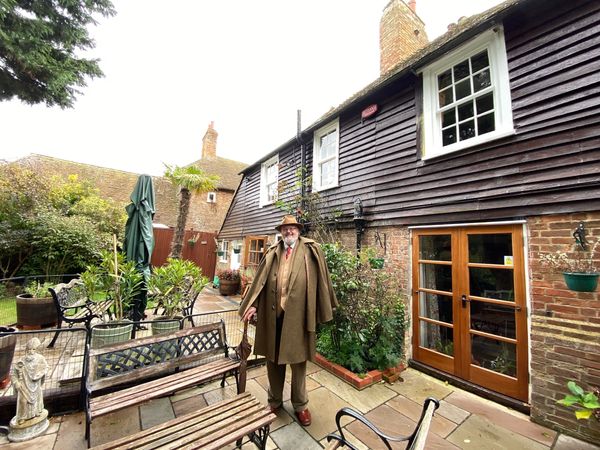
Dr Mead resides in an historic house (circa 1420) in the ancient town of Lydd in Kent, some 30 miles along the coast from the historical location of Eastbourne Medsey, while maintaining his association with Eastbourne and Meads through the lordship and his charitable and historical interests.
His House, although having no connection with Eastbourne Medsey, nevertheless has its own has interesting history. Originally detached, it now forms the centre of a terrace. It has links to 17th Century Smuggling, including a small 'secret' chamber, found when renovation was being undertaken 20 years ago. From its Medieval origins to extensions in the Tudor period, and the augmenting of its wooden construction with brick and stone during the Georgian times. There is even a suggestion it served a Coaching Inn at some point and was subsequently divided from one dwelling to four cottages and then eventually being reunited, by the present Lord, as it is today as one house.
Family & Friends
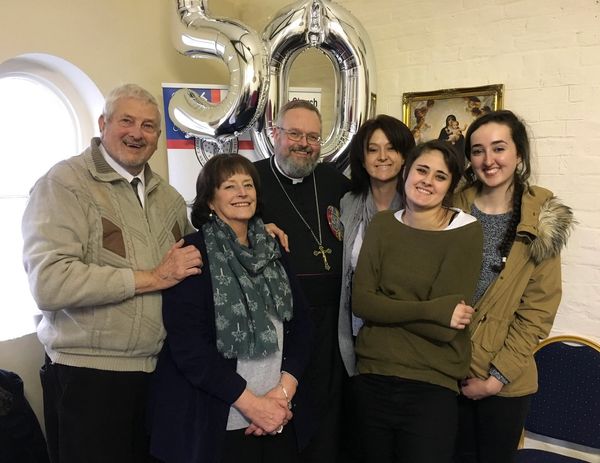
Family and friends have always been at the heart of the Lord of Eastbourne Medsey's life. He has been especially fortunate in the love, encouragement and steadfast support of his parents, Laurence and Margaret, of his sister Diane, more latterly his brother-in-law Mike, and his nieces Megan and Rosie, all of whom he values beyond measure. His friends too are highly valued and he knows that they have enriched his life with their support and friendship in so many ways.
Whatever public offices, responsibilities or distinctions life may bring, it is within the family and among one's friends, that one finds the deepest sense of continuity, belonging and home.
In that sense the story of Eastbourne Medsey is not simply one of history, inheritance and tradition, but also of family, of one generation supporting another and of those relationships which give meaning to everything else.

And not forgetting ...
No family is complete without all its members - and the Lord of Eastbourne Medsey has always had animals in his life.
He keeps a small flock of chickens - now rather elderly ladies - who were rescued from commercial egg production when their lives were to be prematurely cut short!
Currently, he is blessed to share his home with his three Jack Russell's, Minnie, Daisy and Pepsi.
A Family Manorial Heritage
The present Lord’s interest in manorial history is also informed by his own family background.
The Mede, Meade and Mead family has long associations with landholding and local office in both Somerset and Essex.
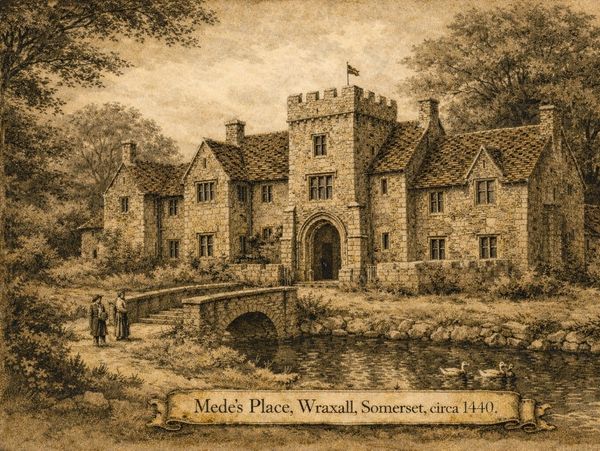
In Somerset, members of the medieval Mede family were established at Wraxall, where the family residence known as Mede’s Place is recorded, while later branches of the Meade family in Essex were associated with a number of manorial estates.
(Image: a liberal artistic representation of what the Mead ancestral home may have looked like)

The Mede Family and the Berkeleys
The medieval Mede family of Wraxall in Somerset was prominent in the civic and landed life of the West Country. One of the most significant connections in the history of the Mede family of Wraxall was with the great Berkeley family of Gloucestershire.
In 1465 Isabel Mede, daughter of Philip Mede of Wraxall, married Maurice Berkeley, younger brother of William Berkeley, Lord Berkeley. The marriage united a prosperous and influential West Country mercantile and landholding family with one of the oldest baronial houses in England.

Battle of Nibley Green
The connection acquired particular significance during the long-running dispute between the Berkeleys and the Lisle family over the Berkeley inheritance. On 20 March 1470 the dispute culminated in the Battle of Nibley Green, near North Nibley in Gloucestershire.
(Image: Graham Turner's Painting of the Battle)
William Berkeley and Thomas Talbot, Viscount Lisle, assembled their respective retainers and supporters to settle the quarrel by force. Lisle was killed and the Berkeley forces were victorious. The engagement has often been described as the last battle fought in England solely between the private armies of feudal magnates.
Philip Mede is recorded as having supported the Berkeley cause with men, while his son-in-law Maurice Berkeley also joined his brother’s forces. Thus the Mede family’s association with the Berkeleys was not merely one of marriage, but formed part of the turbulent political and territorial world of late-medieval England.
Medes of Essex
By the early modern period, members of the Mede / Meade / Mead family were established in Essex and connected with a number of manorial estates, including Wenden Lofts, Leebury, Elmdon Bury, Pigotts, Wigpitts, Cocksalles. Rockells, Manuden Hall,
Mounteneys / Dagworths - apparently a half moiety, Nortofts, Great Easton and Chrishall Grange.
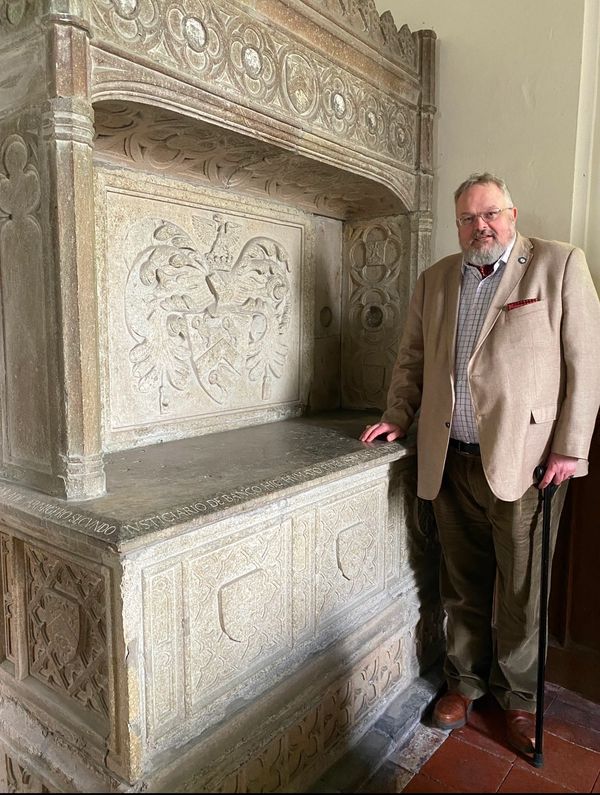
(Image: In St Nicholas Church, Elmdon, the tomb of Sir Thomas Mead, a judge of the Queen's bench (d. 1585). The tomb is constructed of Purbeck marble and contains a carved inscription and arms. These feature a Pelican in Her Piety.)
Family tradition and genealogical reconstruction have long treated these branches as related, and the continuity of surname, social standing and landed associations makes the connection credible; nevertheless, in keeping with the evidential approach adopted elsewhere on this website, it is best described as a traditionally accepted family connection rather than as an unbroken descent proved at every generation by surviving documentation.
Ongoing Research
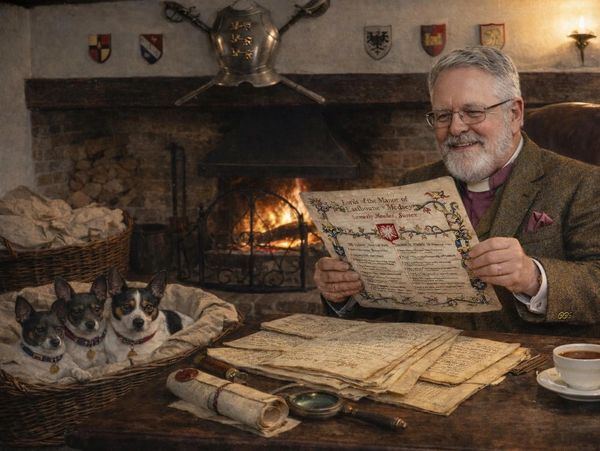
The surviving documentary record does not establish every generational link between the Somerset and Essex branches beyond doubt, and the connection is therefore treated with appropriate historical caution.
Nevertheless, the family’s longstanding association with local landholding, civic office and manorial society forms an interesting background to the present Lord’s own stewardship of Eastbourne Medsey.
Mead Family research is ongoing and a separate page will follow in due course.